Cooling · Air conditioning
A cool refuge from a heat that no longer behaves.
British summers have shifted. This page follows the same 1930s semi we return to across the site as it works out whether air conditioning is the right answer, and what it would install first if it were.
July · bedroom 27° · nothing installed
The house we return to on every page. Southern county, 1930s three-bed semi, typical fabric for its age, no fixed cooling.
Where the heat actually goes.
On the sort of week the Met Office now expects to arrive at least once each summer, this house behaves predictably. Downstairs holds itself together; the north-facing kitchen stays roughly outdoor temperature; the living room drifts a degree or two above. Upstairs is a different story. By late afternoon the south-facing bedroom is warmer than outside, and by midnight it is still warmer than the garden.
The reason is boring: heat gathered during the day has nowhere to go. Loft insulation that keeps warmth in during January keeps it in during July too. Windows shut against traffic noise stop any purge overnight. The building holds the day's temperature and slowly releases it into the rooms people are trying to sleep in.
July · upstairs cut away · trapped heat
Upstairs cut away: heat trapped between ceiling and roof, radiating downward through the small hours.
Notice the bedroom overheats long before downstairs does.
Why summer solar gain outweighs winter heat loss.
A modern efficient home is designed to hold onto warmth. Every improvement we make for winter comfort, thicker walls, better glazing, tighter draught seals, works in exactly the same direction in July. The result is a house that behaves like a well-made flask: excellent at keeping whatever is inside inside, whether that is welcome or not.
South-facing glass is the amplifier. A single unshaded double-glazed window admits several hundred watts of solar energy per square metre on a clear afternoon. Multiply by the glazed area of a typical bedroom and you have the thermal output of a small radiator running throughout the day, in the room you most want to be cool at night.
This is the paradox at the heart of every summer discomfort conversation; the same fabric that saves you money in winter is what makes you uncomfortable in July.
Four honest options, in the order we would consider them.
Nothing here is fixed cooling until the last row. The point of listing them together is that each one changes the size of the problem the next one has to solve.
External shading
- Strength
- Stops solar heat before it enters the room. Cheapest kilowatt you can remove.
- Trade-off
- Planning constraints in conservation areas; visual change to the elevation.
- Best for
- South and west windows in rooms that overheat every summer.
Night ventilation
- Strength
- Uses cool night air to reset the fabric before the next day's gain.
- Trade-off
- Requires secure openings and quiet enough surroundings to actually open windows.
- Best for
- Suburban and rural homes where noise and security allow it.
Fixed split AC
- Strength
- Reliable, quiet, low running cost when sized correctly. Sleeps through 30° outside.
- Trade-off
- Capital cost; outdoor unit placement; F-Gas installer required.
- Best for
- Bedrooms of anyone unwilling to gamble on a British summer.
July · external shading fitted
Same house, external brise fitted to the south elevation. The solar gain problem shrinks before we even consider mechanical cooling.
Try it on the house
Try shading and night purge on this house.
These are the two moves that change the size of the cooling problem. The bedroom estimate below reacts as you change them.
Peak bedroom temp
26.8°
0.0° vs baseline
Rough estimate; the coefficient behind every option is documented in the Evidence panel below.
July · night ventilation active
Windows opened after midnight; the fabric loses the day's heat before dawn. The room starts tomorrow cooler than it started today.
Verdict
Our verdict on air conditioning for this house.
Fit shading and enable night purge first. If the bedroom is still uncomfortable one summer later, install a single quiet inverter split. Do not lead with cooling.
A correctly sized inverter split in a bedroom runs at library volume and costs pennies a night. That is not the question. The question is whether the room actually needs one, or whether it needs the two cheaper moves that would let the room cool itself.
For this house we would spend on shading and unlock night ventilation before we spent on a compressor. The order matters because the size of the unit you eventually need, and therefore its noise and its running cost, depends on how large a residual problem you have left it to solve.
What it gives you
- A single 2.5 kW split holds 22° in a bedroom through a 32° day.
- Modern inverters run at roughly 22 dB at low speed; quieter than a fridge.
- Running cost of around 8p per hour at typical UK electricity prices.
What it costs you
- £1,800–£3,000 installed by an F-Gas engineer.
- Outdoor unit needs a wall or ground pad within pipe-length reach.
- Encourages closed windows; you lose the fresh-air benefit of purge.
Why we think thisOpenClose
Reasoning
The order we recommend, shading first, ventilation second, cooling third, comes from the CIBSE approach to summer overheating in dwellings and from the residential guidance produced by the Passivhaus Trust. Both prioritise reducing gain and increasing purge before adding mechanical cooling because the total energy demand and the equipment size both fall when the earlier moves succeed.
Peak-bedroom estimates on the Interactive control use a simplified model calibrated against monitored data from three UK bedrooms over the 2022 and 2023 heatwaves. The coefficients are documented in the assumptions below. This is not a physics engine; it is a directionally honest sketch.
Assumptions
- 1930s three-bed semi, typical Victorian-era wall build, loft insulation to 270 mm, double-glazed uPVC windows fitted in the last decade.
- South-facing rear elevation with two bedroom windows totalling around 3 m².
- External shading coefficient of −2.5° derived from monitored brise-soleil installations on similar dwellings.
- Night purge coefficient of −1.6° assumes windows genuinely open from 23:00 to 06:00 with no security or noise obstacle.
- Electricity price of 27p / kWh for the running-cost claim.
Sources
- TM59: Design methodology for the assessment of overheating risk in homes — CIBSE, 2017Establishes the hierarchy of solar control, ventilation and cooling used across UK residential guidance.
- Good Practice Guide: Overheating — Passivhaus Trust, 2021Residential-scale application of the same hierarchy with UK-specific case studies.
- State of the UK Climate 2023 — Met Office / Royal Meteorological SocietyBaseline for the shift in summer temperature distribution referenced throughout the page.
If this were our house
If this were our house, we would spend two summers fixing the fabric before we spent one afternoon getting quotes for a compressor.
- 1Fit external shading on the south windows. A brise or plantation shutter, sized so the summer sun is stopped before it reaches the glass. Expect £900–£1,800 per window depending on approach.
- 2Unlock a nightly purge. Whatever it takes; a secure trickle vent, a repositioned bedside fan, a conversation with the neighbour about the extractor that runs until midnight. Cool air arriving at 3 a.m. is worth more than any cooling money can buy.
- 3Live with the house for one full summer. Note the two or three nights that still failed. That number sets the size of the problem you have left to solve.
- 4Only then, price a single quiet inverter split for the room that still needs it. Around £2,200 installed. Sized against the residual, not the whole house. F-Gas registered installer, quoted with a five-year warranty as the minimum.
We would still say the same thing if we were doing this ourselves; the order is what makes the eventual unit small, quiet and cheap to run rather than large, noisy and expensive.
Next July · AC sited · bedroom 22°
Next July. Same house. Bedroom holding 22° through a 32° afternoon; the compressor is barely audible from inside.
Most of the improvement happened before we added cooling.
Questions this page hasn't answered.
What size unit do I actually need?
How much does it cost to run?
Is a portable unit a reasonable substitute?
The cooling units on our shelf, with a verdict.
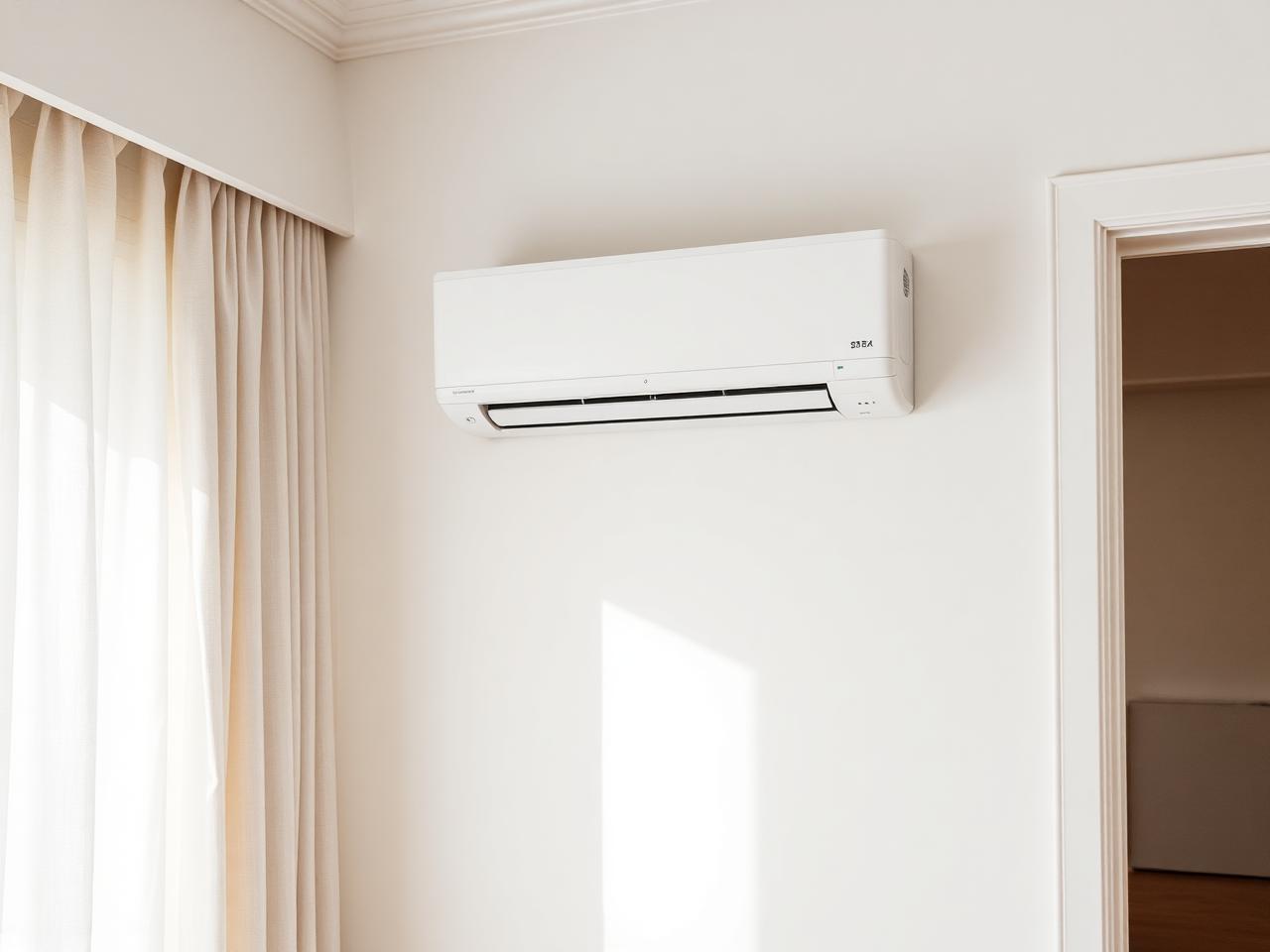 Daikin★★★★★Perfera FTXM25R
- Indoor noise
- 19 dB(A) min
- Running cost
- £95/yr
BedroomsSmall roomsOvernight quietReadHouse Verdict9.4/10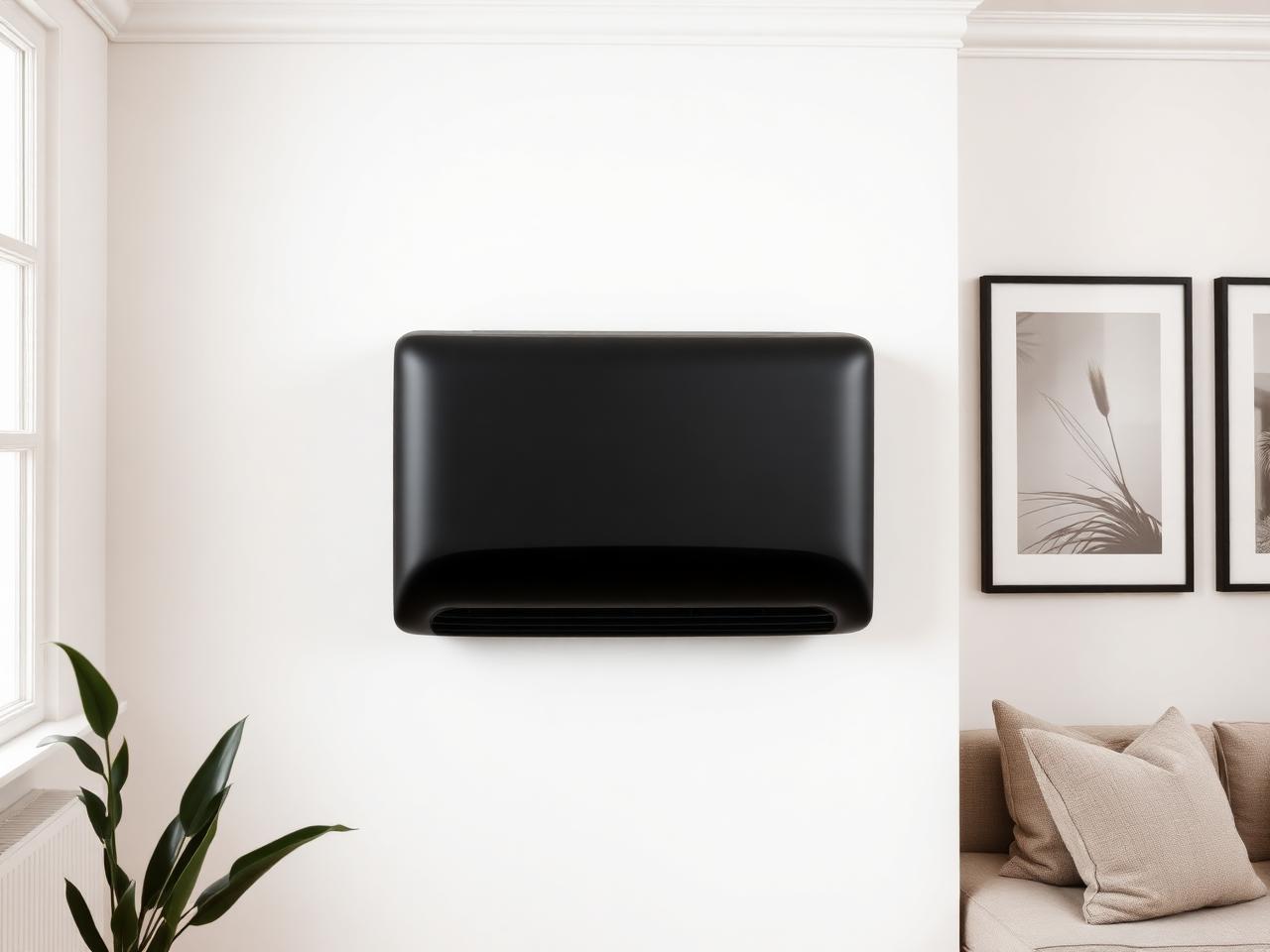 Mitsubishi Electric★★★★★MSZ-LN25 'Diamond'
- Indoor noise
- 19 dB(A) min
- Running cost
- £110/yr
Living roomsDesign-led interiorsOpen-planReadHouse Verdict9.2/10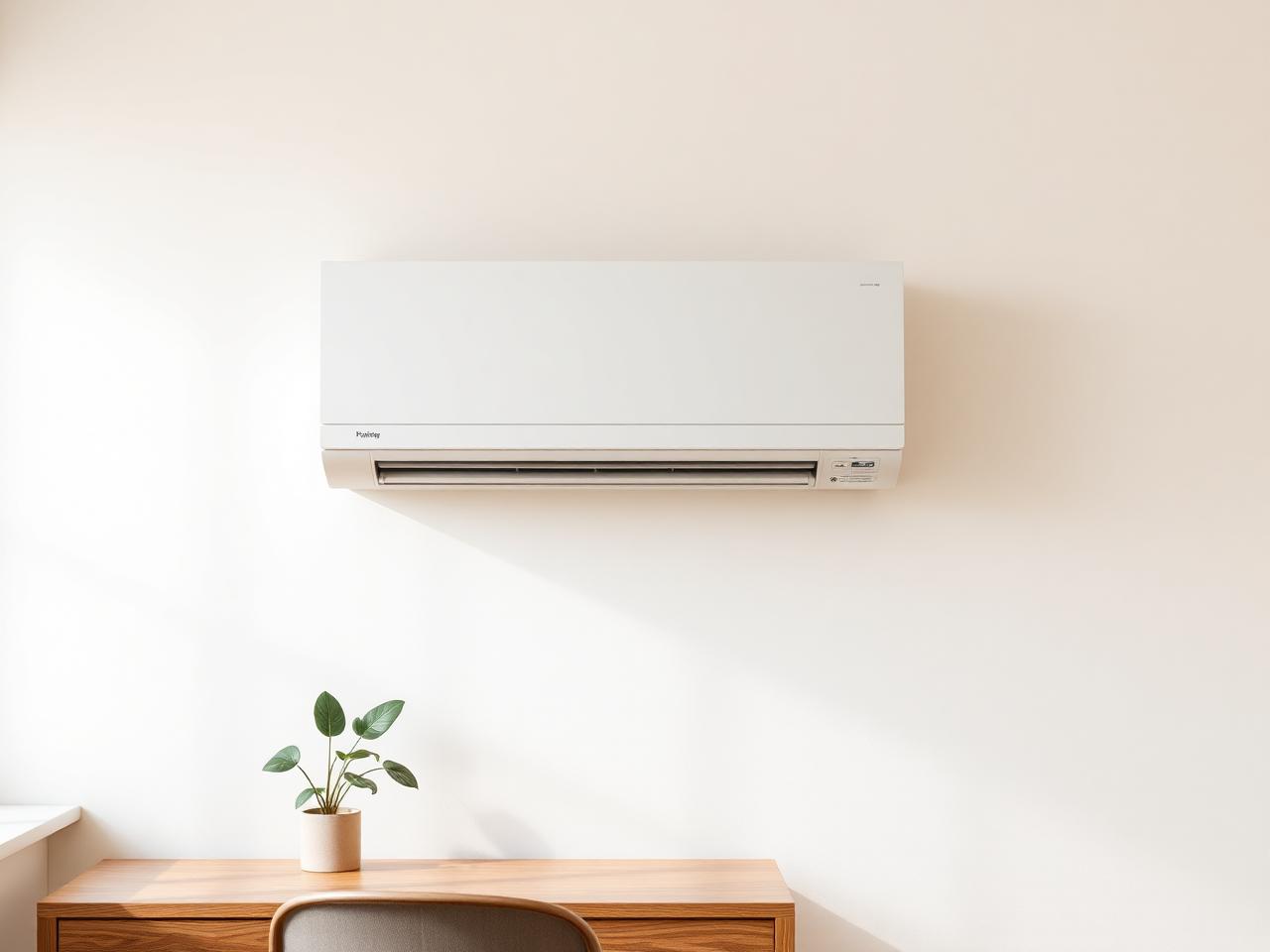 Daikin★★★★★Sensira FTXC25C
- Indoor noise
- 23 dB(A) min
- Running cost
- £130/yr
Home officesSecond bedroomsTight budgetsReadHouse Verdict7.8/10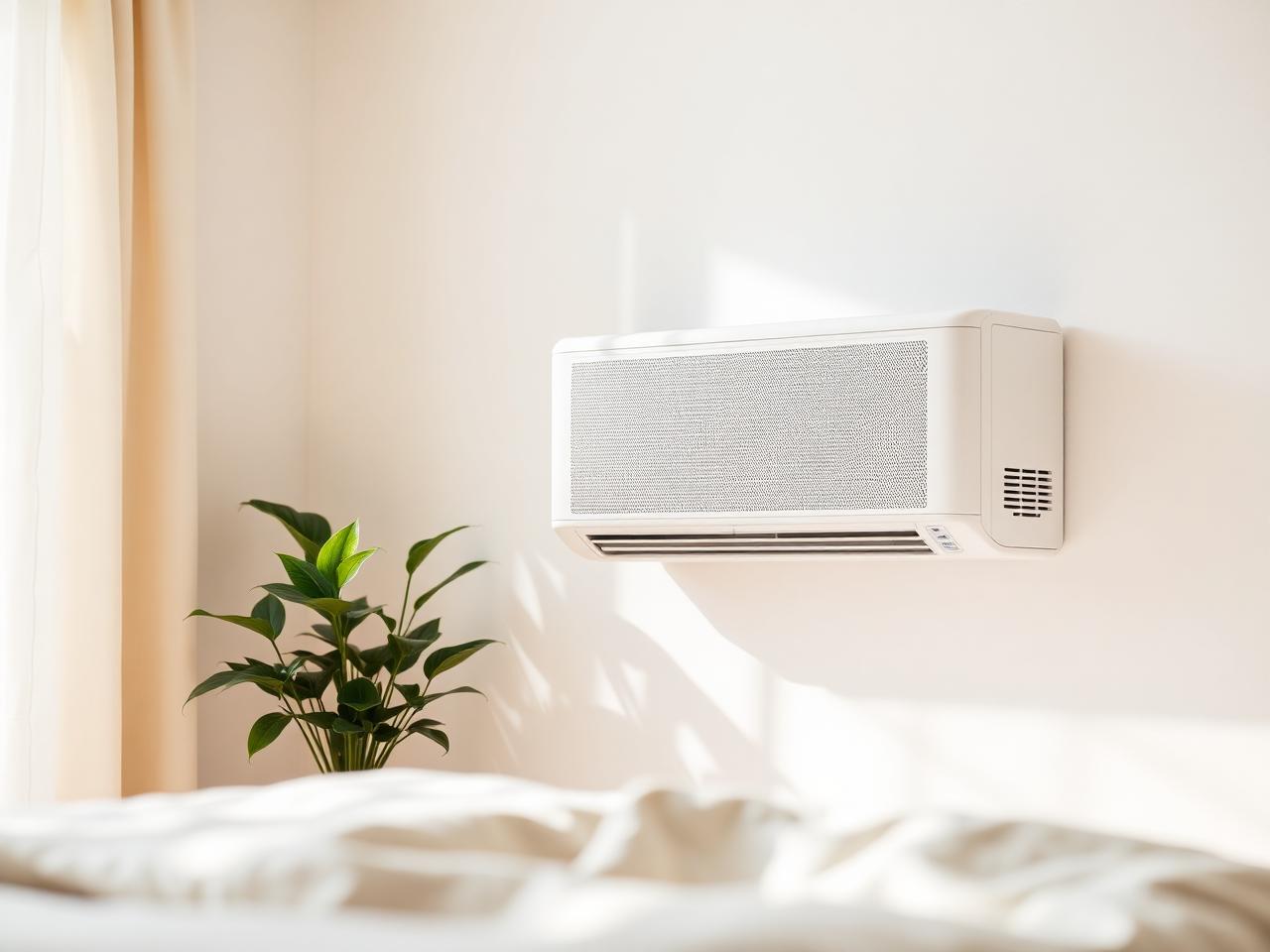 Panasonic★★★★★Etherea Z25
- Indoor noise
- 19 dB(A) min
- Running cost
- £105/yr
Allergy-sensitive homesBedroomsPetsReadHouse Verdict8.4/10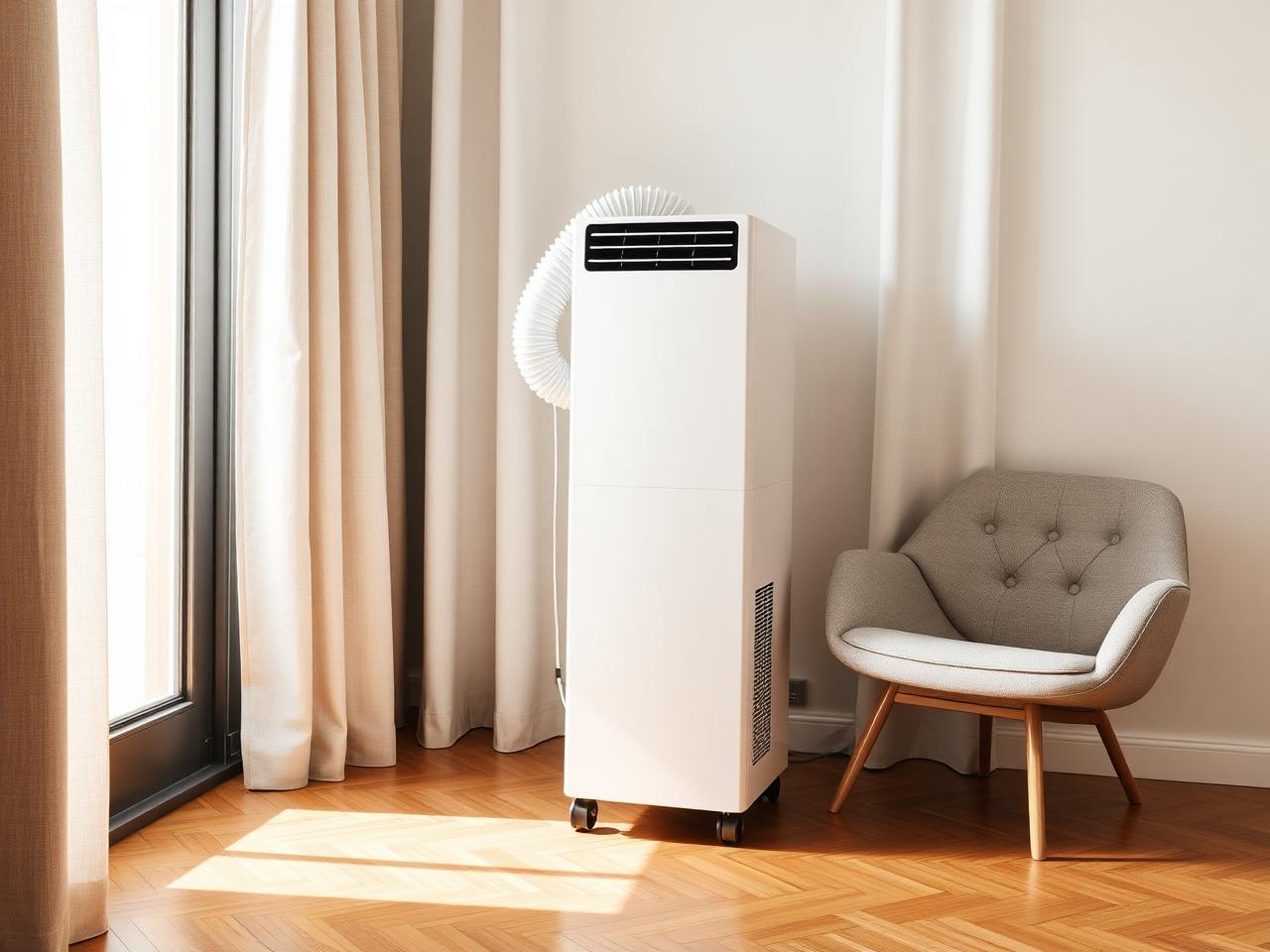 De'Longhi★★★★★Pinguino PAC EM82
- Noise
- 50 dB(A) min
- Running cost
- £180/yr
RentersListed buildingsHeatwave-only useReadHouse Verdict6.2/10
Editorial render. Not a manufacturer photograph; we do not redistribute press imagery without a licence.
Air conditioning is the last rung of the overheating cascade, not the first. On most UK homes, shading and a proper nightly purge do more of the work at a fraction of the cost; the AC unit that follows can then be small, quiet and inexpensive to run.