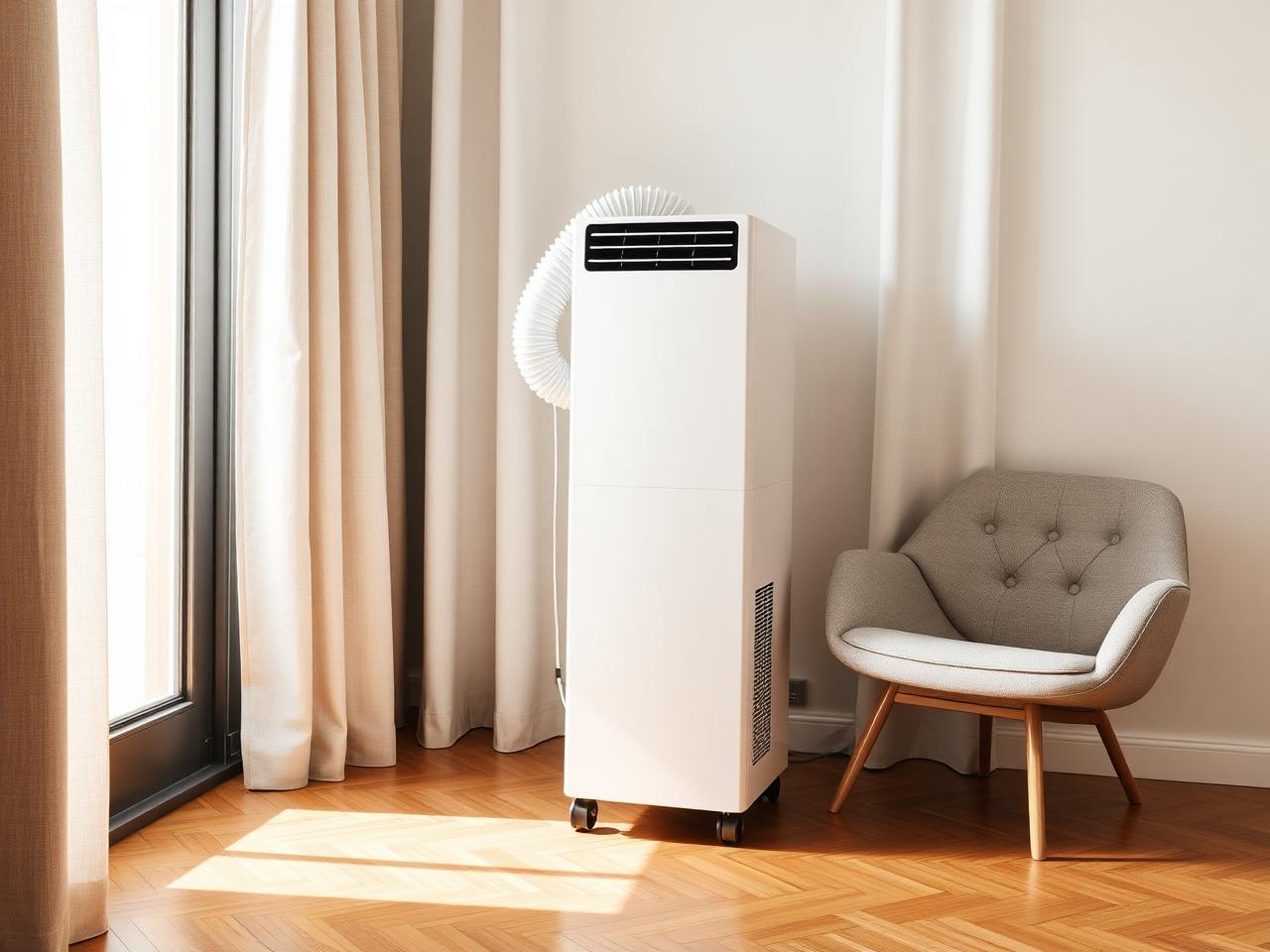
Portable AC

The honest case for portable units; and the honest case against.

A portable AC is the right answer for a rented flat, a temporary problem, or a one-off bedroom. It is almost never the right answer for a hot south-facing house every summer. Here's how to tell which you have.

Field guide
Portable AC
Read time
5 min read
Bias
Independent
Sources
UK installs

Start here

What most people
want to know first.

Four quick framings to help you place this topic inside your wider home plan.

  1. 01

    Start here if you rent. A portable is genuinely your best option; your landlord will not let you fit a split. Pick dual-hose only; single-hose halves the unit's effective capacity.

  2. 02

    Start here if you've bought one and it's barely working. The hose seal matters more than the brand. A poorly sealed window kit lets the warm air you just expelled stream straight back in.

  3. 03

    Start here if you're spending £500+ on a portable. You're a few hundred pounds away from a wall-mounted split that's quieter, twice as efficient, and adds value to the house.

  4. 04

    Start here if noise is your priority. No portable will ever be as quiet as a fixed split. If sleep is the goal, the portable will disappoint.

The field guide

What you actually
need to know.

Independent, opinionated, and written for homeowners spending real money.

§01

Single-hose vs dual-hose; the one spec that matters.

A single-hose portable expels hot air through one hose. The replacement air comes from… inside your house. Which means it sucks warm outside air back in through every crack to balance the pressure. You're effectively cooling outdoor air. Single-hose units typically deliver 40–50% of their rated capacity in practice.

A dual-hose portable draws outside air through one hose, uses it to cool the condenser, and expels it through the other. The room stays sealed. Same compressor, same refrigerant, same shell; but 2x more effective at cooling the room. Always specify dual-hose.

The reason single-hose units still dominate the shelves is price: a dual-hose unit is typically £100–£200 more. It's the cheapest £150 you'll spend on summer comfort.

§02

The window kit is the bottleneck.

Most portable ACs ship with a flimsy plastic window panel that fits sash windows badly and casement windows worse. Every gap around it leaks warm air straight back into the room. We've measured rooms where sealing the kit properly dropped temperatures by 3–4°C with no change to the unit itself.

If you're committing to a portable for the summer, spend an afternoon and £30 on proper foam sealing, weatherstripping around the panel, and a cover for the sash gap above. It's the difference between a unit that works and a unit you'll resent.

§03

Noise: portables vs splits, the honest numbers.

A premium portable AC at maximum speed sits at 52–58 dB(A); roughly the volume of a normal conversation, measured at the unit. Half a metre away from your bed at 3am, that is loud. The compressor is in the room with you.

A wall-mounted split puts the noisy compressor outside. The indoor unit runs at 19–25 dB(A) on sleep mode; quieter than a fridge. For bedroom use, this is the entire reason splits exist.

If you must use a portable in a bedroom: cycle the unit (cool the room hard before bed, switch off to sleep), or fit a long enough hose that you can put the unit in a hallway and pipe cool air in.

§04

The maths: when a portable actually wins.

Portable wins when: you rent, your problem is one room for a few weeks a year, you have nowhere to fit a split's outdoor unit, or you're testing whether you'd benefit from AC before committing to install. £400–£700 for a decent dual-hose unit, set up in an afternoon, sold on eBay in October.

Portable loses when: you own the house, you're spending £500+, the same room needs cooling every summer for the next decade, or you care about sleep quality. The lifetime running and electricity cost of a portable in heavy use exceeds a split's full install cost within 3–4 summers.

What it costs

Illustrative UK ranges, 2026.

Single-hose portable (avoid)
£250 – £450

Cheap to buy, expensive to run, only half-effective. Last-resort.

Dual-hose portable (recommended)
£450 – £850

The minimum you should be looking at if a portable is the answer.

Premium quiet portable
£800 – £1,300

Inverter compressor, lower noise. Closes some of the gap to a split.

Single split (alternative)
£1,800 – £3,200

Wall-mounted, far quieter, 2x more efficient. Worth pricing alongside.

Ranges drawn from MCS, EST, HPF and installer-quoted data. Your home's price depends on access, fabric and spec.

Decision framework

Three questions to answer before you commit.

01

Single or dual hose?

Dual, always. Single-hose is the most over-sold spec in UK summer retail.

02

Is it worth it for one hot week a year?

Probably yes if you're sleeping badly. £450 is cheaper than a week of bad sleep, and you'll likely use it more than you think.

03

Should I just fit a split instead?

If you own the house and the same room overheats every year; yes. The maths is comfortable inside three summers.

Your next step

Want a tailored
recommendation?

Two minutes. Score your home and get a plan that connects portable ac to the rest of your comfort & energy stack.

Your next step

Don't wait for this hub.

While we deepen this guide, here's the same thread, in tools and adjacent reading that already exist.