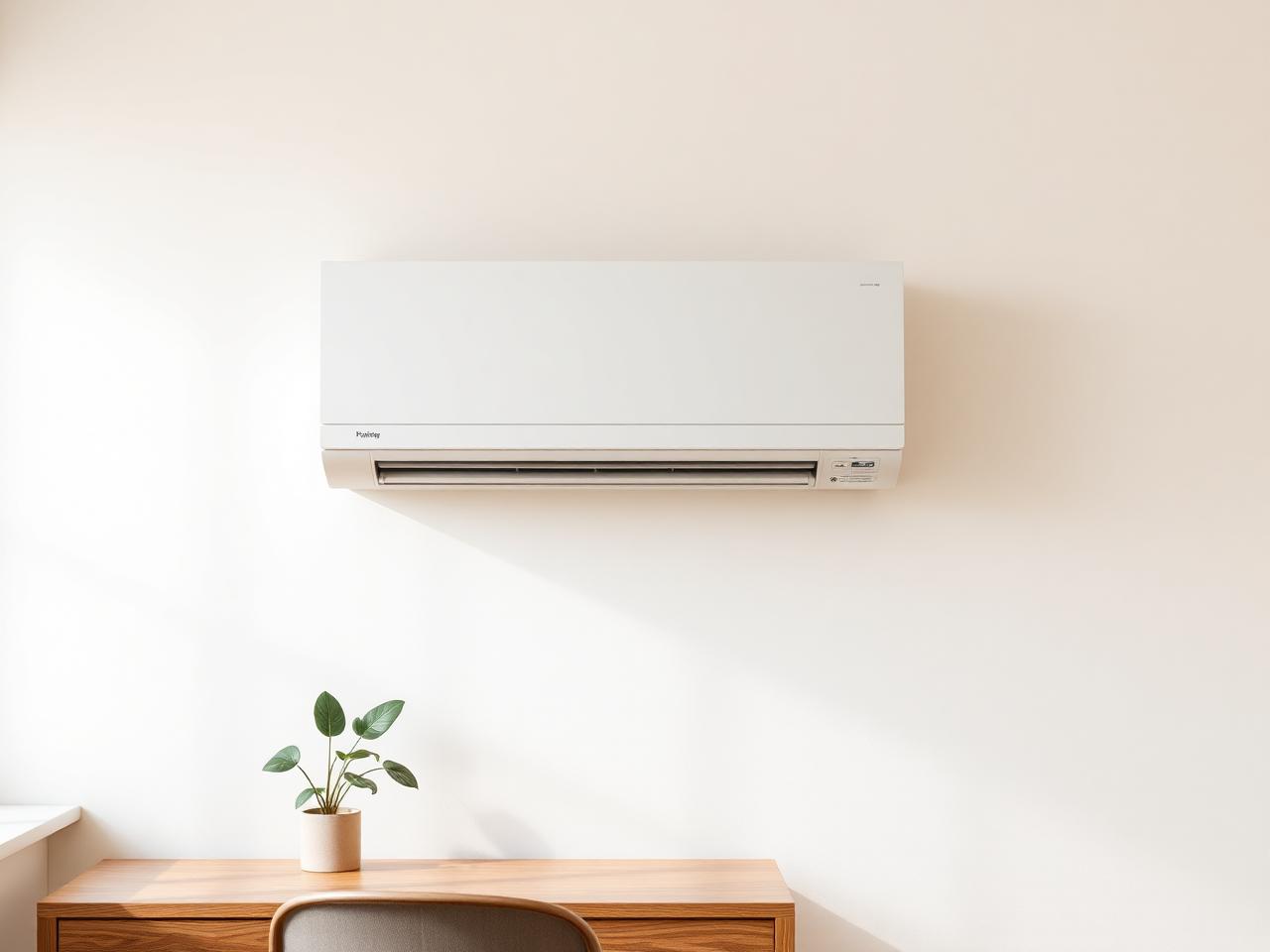
The one-line verdict
The honest value split; the unit we specify when a competent Daikin install matters more than the last two decibels of quietness.
The Sensira is Daikin engineering at a price point that lets an F-Gas engineer do a proper job without the flagship premium. The COP is respectable, the reliability data is boringly good, and the same UK parts network that keeps a Perfera running in year eight also keeps a Sensira running. For a second bedroom or a home office where the room does not need to be library-quiet at three in the morning, this is the answer that leaves budget for the other rooms that also need attention.
It is audibly noisier than the Perfera at low fan speed, which will matter in a primary bedroom and will not matter in a home office. There is no app as standard, so the controls conversation begins and ends with the handset. The output range is narrower than the flagship, so the unit spends more of its time at a fixed setting rather than modulating cleanly across small loads.
If this were our home
For a home office over a garage we would specify a Sensira, spend the saved £700 on an outdoor unit sound-isolation bracket and a properly routed pipe run, and consider a Perfera for the bedroom in the same visit. The Sensira is the workhorse; the Perfera is the specialist.
- 01Home offices, second bedrooms and box rooms where the acoustic target is 'reasonable' rather than 'silent'
- 02Multi-room installs where the same budget can now cover two rooms instead of one
- 03Homeowners who value Daikin's UK parts network but do not need flagship acoustics
- 01The install is a primary bedroom and overnight quietness is the whole point
- 02The homeowner will live in the app rather than the handset
Worth considering instead
Three honest paths away from this pick, each with a reason.
The suitability matrix
Where this fits, where it works with caveats, and where we would look elsewhere.
1930s semi
Solid or early-cavity walls, a bay-fronted ground floor and a loft that is nearly always the room worth insulating first; the archetype where the cheapest fix routinely beats the exciting one.
1960s–80s detached
Timber-framed or cavity-walled with hung tile above the ground floor and thermal bridging that quietly runs the annual bill; the archetype where drawings on file are worth more than any assumption.
Modern detached
Cavity-wall construction, generous glazing, a detached plot that opens the archetype up to the sun in three directions; the archetype where cooling starts to earn its place on the plan rather than being an afterthought.
Chalet-dormer
One-and-a-half storeys with living space pushed into the roof; dormer rooms behave more like a loft conversion than a bedroom.
Bungalow
Single storey with the loft immediately overhead; overheating and heat loss both travel through one large surface, which is either the archetype's biggest liability or its cheapest fix.
Town house
Three storeys stacked over an integral garage; heat rises through the stairwell; overheating settles on the top floor while the ground floor stays reasonable.
Victorian terrace
Solid brick walls, sash windows, single-skin extensions round the back and party walls that quietly ration the ways heat can leave; the archetype where insulation strategy determines everything else.
New build
A tight fabric, generous glazing and an MVHR system that is either the archetype's biggest advantage or its most-neglected liability; the archetype where the questions are about air more than heat.
Stone cottage
Thick permeable walls, small deep-reveal windows and a listing sensitivity that constrains every intervention; the archetype where the wrong upgrade causes damage the previous three centuries avoided.
Purpose-built flat
Neighbours on three or four sides borrow and lend heat; single-aspect glazing dictates ventilation strategy; freeholder permission decides which upgrades are on the table.
Home office
One occupant plus screens contribute meaningful heat across a working day; ventilation, acoustics and comfort compound rather than trade against each other.
Bedroom
A small volume with one occupant contributing sensible and latent heat for eight hours; overnight comfort is dictated by ventilation strategy and by whatever radiates through the ceiling from the loft above.
Loft conversion
Thin insulation between rafters, a hot roof above and rooflights that resist proper shading; the hardest room in a UK house to keep within comfort in summer and the easiest to lose heat from in winter.
Conservatory
Glazed walls and roof deliver enormous solar gain by midday and equally enormous heat loss overnight; the physics rules out year-round comfort in most UK conservatories without a structural intervention.
Living room
The largest habitable volume in most homes and rarely on its own thermostat; wall placement is part of the room's composition, so the visual answer matters as much as the acoustic one.
What we would ask the installer
A verdict is only useful if it survives the questions an informed buyer would put on the doorstep.
- 01
Is the model quoted the current Sensira, or a legacy FTXC that is being cleared through?
- 02
What is the low-fan-speed noise at the bedhead, in this specific room?
- 03
Does the install include a proper pressure test and evacuation?
- 04
Will the warranty registration be completed on your certificate, or left to me?
Why we have reached this conclusion
Why the Sensira is our honest value default
Every part of a proper AC install that matters in year eight, the pipe run, the evacuation, the outdoor unit isolation, the installer training, is unchanged by the box on the wall being a Sensira rather than a Perfera. The only real trade-off is a few decibels at the lowest fan speed. For a second bedroom or a home office, that is a trade we make without hesitation.